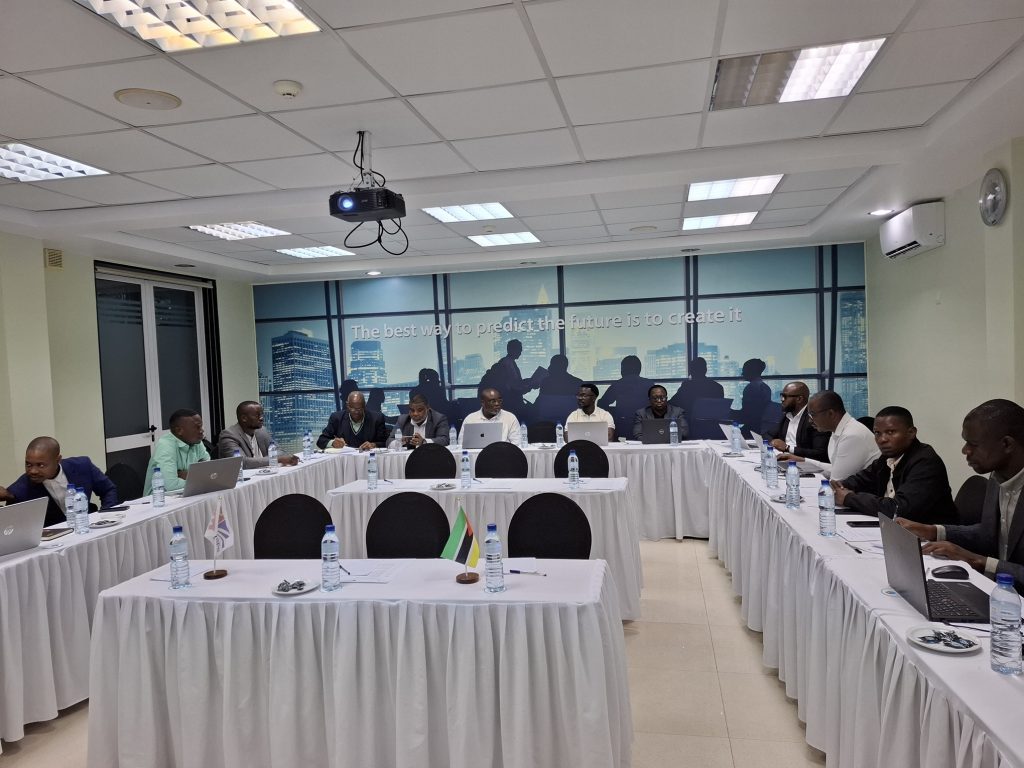
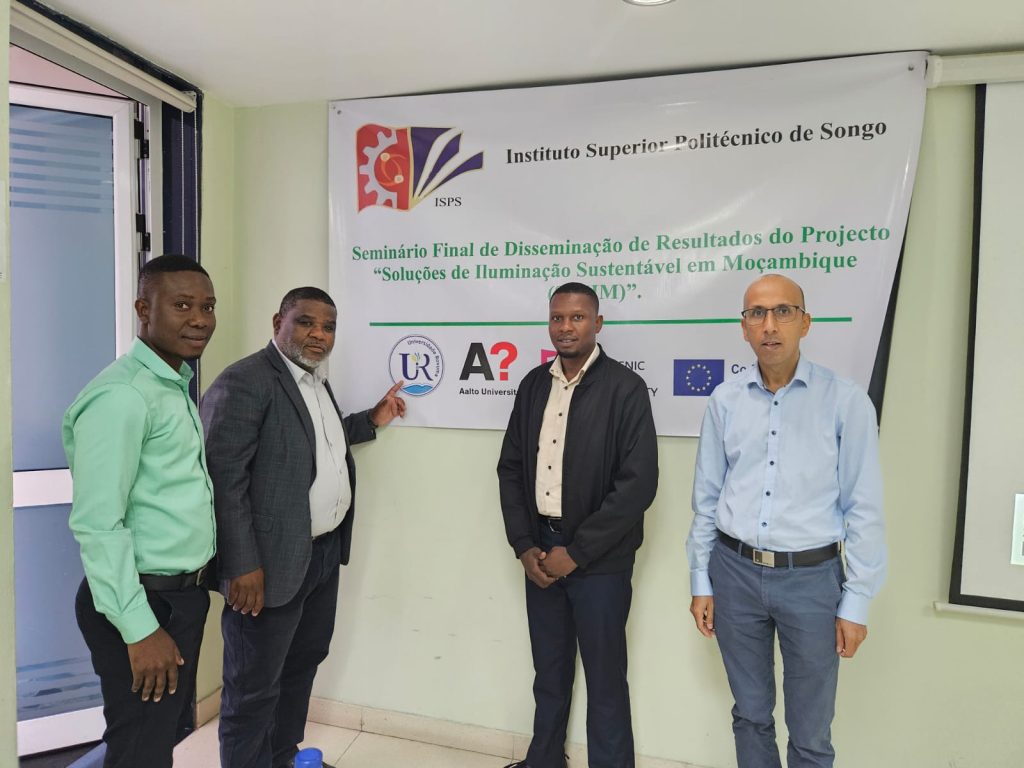
The final dissemination seminar of the SLSIM project was held on September 28, 2026, at Hotel Terminus in Maputo, Mozambique. The event was organized by the Instituto Superior Politécnico de Songo (ISPS). Participants came from partner universities, other academic institutions such as Universidade Eduardo Mondlane, government agencies including the Ministry of Mineral Resources and Energy, public institutions including Electricidade de Moçambique and the Instituto Industrial de Maputo, and private organizations.
António Tomé Mandala from ISPS opened the seminar and welcomed the participants. Pramod Bhusal from Aalto University then introduced the Erasmus+ programme, including the opportunities it offers to non-associated third countries, the Capacity Building in Higher Education (CBHE) action, and the SLSIM project itself. In a second presentation, he described the project’s activities and outputs, together with its short-term results and expected long-term impacts. Filipe Pawandiua from Universidade Rovuma presented the lessons learned and the impact of the project from the perspective of the local partners.
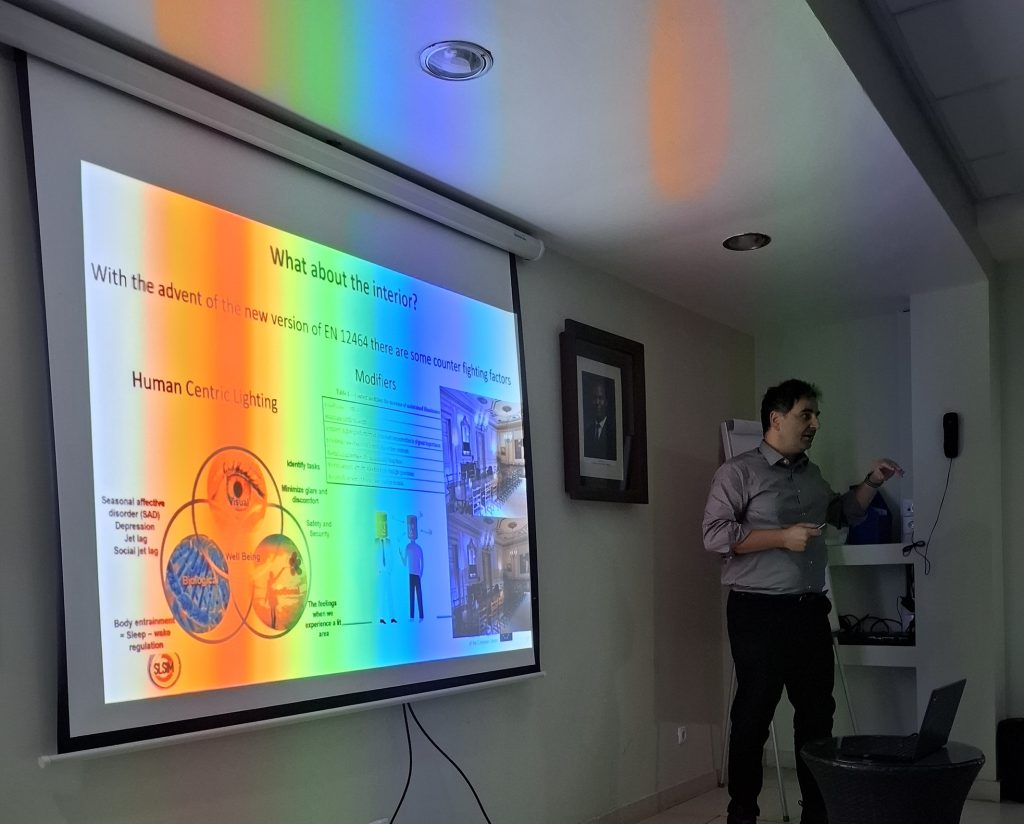
The keynote, “Energy-Efficient and Environmentally Sustainable Lighting,” was delivered by Lambros Doulos from the Hellenic Open University. It covered the energy-saving potential of lighting in both exterior and interior spaces. Examples included the replacement of inefficient lighting systems, use of lighting controls such as scheduling, daylight-responsive dimming, occupancy sensors, and task tuning, and use of daylight. The keynote also stressed the importance of good quality lighting, and of reducing glare and light pollution. Case studies from a university building complex in Athens and the island of Kythnos showed how tailored design, adaptive dimming, and community participation can reduce consumption while improving the quality of lighting.
The seminar included two panel discussions. Panel 1, “Energy-efficient lighting products, market barriers, and opportunities in Mozambique,” was moderated by António Tomé Mandala (ISPS). Panel 2, “University-industry collaboration and future of projects work,” was moderated by Pramod Bhusal (Aalto University).
Local actors taking part in the discussion pointed to several challenges to sustainable lighting in Mozambique. These include the lack of regulation and proper control of product quality, procurement decisions based almost entirely on price, high investment costs, and limited knowledge and skills for selecting and implementing sustainable solutions. Participants also noted that some people are unwilling to take responsibility for sustainable choices, and that even those who are willing often lack the necessary knowledge and skills.
On university-industry collaboration, public institutions showed clear interest and are already taking part in cooperation, while the private sector has so far shown much less interest, and engaging it remains an area that needs to be strengthened.